Why Short Chinese Poems Are Perfect for Beginners
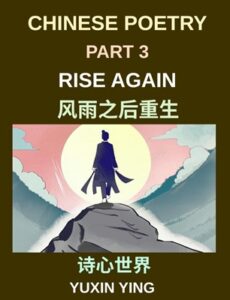
Chinese poetry has thousands of years of history, but beginners do not need to start with long and complicated works. Short poems are often the best entrance into Chinese literature because they contain simple structures, memorable sounds, and powerful emotions.

Many famous Chinese poems have only twenty characters. Although they are short, they describe complete scenes, feelings, and stories. A few carefully chosen words can express loneliness, happiness, homesickness, friendship, or the beauty of nature.
For foreigners learning Mandarin, short poems provide several advantages. They introduce common Chinese characters, improve pronunciation, and help develop a feeling for Chinese sentence patterns.
Chinese children often memorize short poems in primary school because these poems are easy to remember and full of cultural meaning.
Example sentences:
这首诗很短,但是很美。(zhè shǒu shī hěn duǎn, dàn shì hěn měi)- This poem is short but beautiful.

我喜欢简单的古诗。(wǒ xǐ huān jiǎn dān de gǔ shī)- I like simple ancient poems.
小孩子从小学习古诗。(xiǎo hái zi cóng xiǎo xué xí gǔ shī)- Children learn ancient poems from a young age.
《静夜思》 by Li Bai: A Poem Everyone Should Know
One of the most famous Chinese poems is 《静夜思》 (jìng yè sī), written by Li Bai (李白, Lǐ Bái), one of the greatest poets of the Tang Dynasty.
The poem:
床前明月光,
疑是地上霜。
举头望明月,
低头思故乡。
A simple translation:
Before my bed, the bright moonlight shines,
I wonder if it is frost on the ground.
I raise my head and look at the bright moon,
I lower my head and think of my hometown.

This poem is popular because everyone can understand its emotion. A person far away from home sees the moon and suddenly remembers their hometown.
Important words:
床 (chuáng)- bed
明月 (míng yuè)- bright moon
望 (wàng)- to look at
故乡 (gù xiāng)- hometown
Many Chinese people memorize this poem when they are children. Even today, these four lines remain part of Chinese cultural memory.

Example sentences:
我想念我的故乡。(wǒ xiǎng niàn wǒ de gù xiāng)- I miss my hometown.
晚上我喜欢看月亮。(wǎn shàng wǒ xǐ huān kàn yuè liang)- I like looking at the moon at night.
李白是中国著名诗人。(Lǐ Bái shì Zhōng guó zhù míng shī rén)- Li Bai is a famous Chinese poet.
《春晓》 by Meng Haoran: The Beauty of Spring
《春晓》 (chūn xiǎo) by Meng Haoran (孟浩然, Mèng Hào Rán) is another excellent poem for beginners.

The poem:
春眠不觉晓,
处处闻啼鸟。
夜来风雨声,
花落知多少。
A simple translation:
In spring sleep, I do not notice the morning,
Everywhere I hear birds singing.
At night I heard wind and rain,
I wonder how many flowers have fallen.
This poem introduces common words related to nature:
春 (chūn)- spring
鸟 (niǎo)- bird
花 (huā)- flower
风 (fēng)- wind
雨 (yǔ)- rain
The poem creates a peaceful picture. The poet wakes up in spring and hears birds outside. The night rain makes him think about flowers falling from trees.

Example sentences:
春天有很多花。(chūn tiān yǒu hěn duō huā)- There are many flowers in spring.
我喜欢听鸟叫。(wǒ xǐ huān tīng niǎo jiào)- I like listening to birds singing.
今天下雨了。(jīn tiān xià yǔ le)- It rained today.
《登鹳雀楼》 by Wang Zhihuan: Learning Through Images
《登鹳雀楼》 (dēng guàn què lóu) by Wang Zhihuan (王之涣, Wáng Zhī Huàn) is a short poem that teaches an important idea: looking farther allows you to see more.
The poem:
白日依山尽,
黄河入海流。
欲穷千里目,
更上一层楼。

A simple translation:
The sun sets behind the mountains,
The Yellow River flows into the sea.
To see a thousand miles farther,
Climb one more level of the tower.
This poem is famous because the final line has become a common expression in Chinese culture.
更上一层楼 (gèng shàng yì céng lóu) means “to make further progress” or “to reach a higher level.”
It is often used when encouraging someone to continue improving.

Example sentences:
我要继续努力,更上一层楼。(wǒ yào jì xù nǔ lì, gèng shàng yì céng lóu)- I want to continue working hard and improve further.
山很高,但是风景很好。(shān hěn gāo, dàn shì fēng jǐng hěn hǎo)- The mountain is high, but the scenery is beautiful.
我站在楼上看风景。(wǒ zhàn zài lóu shàng kàn fēng jǐng)- I stand upstairs and look at the scenery.

《悯农》: Understanding Ordinary Life
《悯农》 (mǐn nóng) by Li Shen (李绅, Lǐ Shēn) is a short poem about farmers and food.
The famous lines:
锄禾日当午,
汗滴禾下土。
谁知盘中餐,
粒粒皆辛苦。
A simple translation:
Farmers hoe the fields under the midday sun,
Sweat falls onto the soil.
Who knows the food on our plates?
Every grain comes from hard work.
This poem teaches appreciation for food and reminds people that every meal requires effort.
Important vocabulary:
农 (nóng)- agriculture
汗 (hàn)- sweat
米 (mǐ)- rice
辛苦 (xīn kǔ)- hard work

Many Chinese children memorize this poem because it teaches respect for farmers.
Example sentences:
不要浪费食物。(bú yào làng fèi shí wù)- Do not waste food.
农民每天工作很辛苦。(nóng mín měi tiān gōng zuò hěn xīn kǔ)- Farmers work very hard every day.
我喜欢吃米饭。(wǒ xǐ huān chī mǐ fàn)- I like eating rice.
《相思》 by Wang Wei: A Poem About Friendship
Wang Wei (王维, Wáng Wéi) wrote many beautiful poems about nature and emotions. His short poem 《相思》 (xiāng sī) is about remembering someone far away.

The poem:
红豆生南国,
春来发几枝。
愿君多采撷,
此物最相思。
A simple translation:
Red beans grow in the south,
When spring arrives, many branches grow.
I hope you collect many of them,
Because this object represents deep remembrance.
The red bean (红豆, hóng dòu) became a traditional symbol of love and longing in Chinese culture.
This poem is useful for understanding how Chinese poets often express feelings indirectly through natural objects.
Example sentences:
我想念远方的朋友。(wǒ xiǎng niàn yuǎn fāng de péng yǒu)- I miss my friends far away.
朋友之间需要感情。(péng yǒu zhī jiān xū yào gǎn qíng)- Friendship requires feelings.
这个东西代表爱情。(zhè ge dōng xi dài biǎo ài qíng)- This thing represents love.
How to Choose Your First Chinese Poems

Beginners should choose poems with familiar themes. Nature poems are usually easier because they contain concrete images such as mountains, rivers, flowers, birds, and the moon.
Good first poems usually have:
Short length
Common characters
Clear images
Strong emotions
Simple grammar
Avoid starting with poems that contain too many historical references or unusual vocabulary. Classical Chinese is different from modern Chinese, so some poems require explanation.

A good learning path is:
Start with four-line poems.
Memorize the pronunciation.
Understand the meaning.
Learn important vocabulary.
Practice reciting.
Then move to longer poems.
Example sentences:
我每天学习一首诗。(wǒ měi tiān xué xí yì shǒu shī)- I study one poem every day.
这首诗有很多生词。(zhè shǒu shī yǒu hěn duō shēng cí)- This poem has many new words.
学习古诗需要时间。(xué xí gǔ shī xū yào shí jiān)- Learning ancient poetry requires time.

Why Memorizing Short Poems Improves Chinese
Memorizing poetry is not only about remembering literature. It also improves Mandarin ability.
Poems help you learn:
Vocabulary
Pronunciation
Sentence patterns
Chinese culture
Traditional expressions
Many modern Chinese expressions come from ancient poems. After memorizing several poems, you will recognize phrases used in books, movies, and daily conversations.

A short poem can become a small piece of Chinese culture that stays with you forever.
Example sentences:
古诗帮助我学习中文。(gǔ shī bāng zhù wǒ xué xí Zhōng wén)- Ancient poetry helps me learn Chinese.
我每天练习中文。(wǒ měi tiān liàn xí Zhōng wén)- I practice Chinese every day.
中文越来越有趣。(Zhōng wén yuè lái yuè yǒu qù)- Chinese is becoming more and more interesting.
New Words From This Post
- 古诗 (gǔ shī)- ancient poem
- 故乡 (gù xiāng)- hometown
- 月亮 (yuè liang)- moon
- 风景 (fēng jǐng)- scenery
- 辛苦 (xīn kǔ)- hard work
- 记忆 (jì yì)- memory
- 努力 (nǔ lì)- to work hard